What scratching in a wall can and cannot tell you
A scratching sound behind a wall is a clue, not a diagnosis. Mice and rats can move through voids, yet other animals and ordinary building noises can be mistaken for them. The time, position and pattern of a sound may help an inspector decide where to look. They cannot, on their own, establish the species, number of animals or exact entry point. Start with a short record of what you hear and look for supporting signs in accessible places.
What the sound can suggest
Scrabbling or scratching in a cavity, ceiling or beneath a floor can be consistent with rodent movement. Several UK councils list such noises among the signs of mice or rats. A sound heard mainly after dusk may be useful context because these rodents are often active when a household is quiet. Equally, silence during the day does not prove the animal has left. Activity can be intermittent, masked by other noise or taking place in a different part of the structure.
Try to describe the sound in ordinary terms. Was it a brief run, repeated scraping, a rustle or a heavier bump? Did it remain in one bay of the wall or appear to move along it? Note the room, approximate height and time. These details are more useful than an attempt to name the animal from a single noise. A phone recording may help if the sound is clear, but its microphone can change how loud or heavy it seems.
The location offers a starting point rather than a map. Plasterboard, floorboards, pipes and joists transmit sound; a noise that seems to come from one spot may originate elsewhere. A pest inspection can bring together the sound report with physical evidence and the layout of the building.
If more than one person hears it, ask each to note the position independently before comparing accounts. Include an adjoining room, loft or external wall on your sketch. These observations help an inspector choose accessible checks first.
What it cannot tell you
Loudness is a poor way to separate a rat from a mouse. A small animal close to a thin panel can sound surprisingly prominent, while movement farther away may be faint. Nor can a recording show whether one animal has passed several times or several animals have passed once. Avoid estimating the scale of a problem from the number of sounds alone.
Scratching does not prove that an animal is trapped. Rodents can use cavities as routes between sheltered places. It does not prove that the opening is directly behind the noisy section either. The British Pest Control Association advises that even familiar rat sounds need correct identification, because other animals may produce similar noises. In roof spaces, wildlife can broaden the possibilities. Building materials also expand, contract and move, particularly when heating or plumbing is in use.
Most importantly, a quiet night is not a clearance certificate. A problem should be assessed through a combination of observations, not by waiting for one sound to stop. If the noise follows a recent treatment, record whether there are fresh droppings or other new signs and share that information with the provider.
Gather evidence without opening the wall
Make a simple log over several days. Write the date, start and end time, room and approximate wall position. Add whether heating, hot water, an extractor or nearby appliances were running. Mark any pattern, such as a sound that follows the same route each evening. A rough sketch of the rooms can be more helpful than a long description.
In spaces you can reach safely, look for droppings along skirting boards, behind movable items or in cupboards; gnawed packaging; rub marks; or damage around service penetrations. Keep children and pets away from suspected contamination. Photograph signs before cleaning them so that an inspector can judge their position and appearance. Do not assume every dark speck is a dropping: dimensions, shape and setting matter.
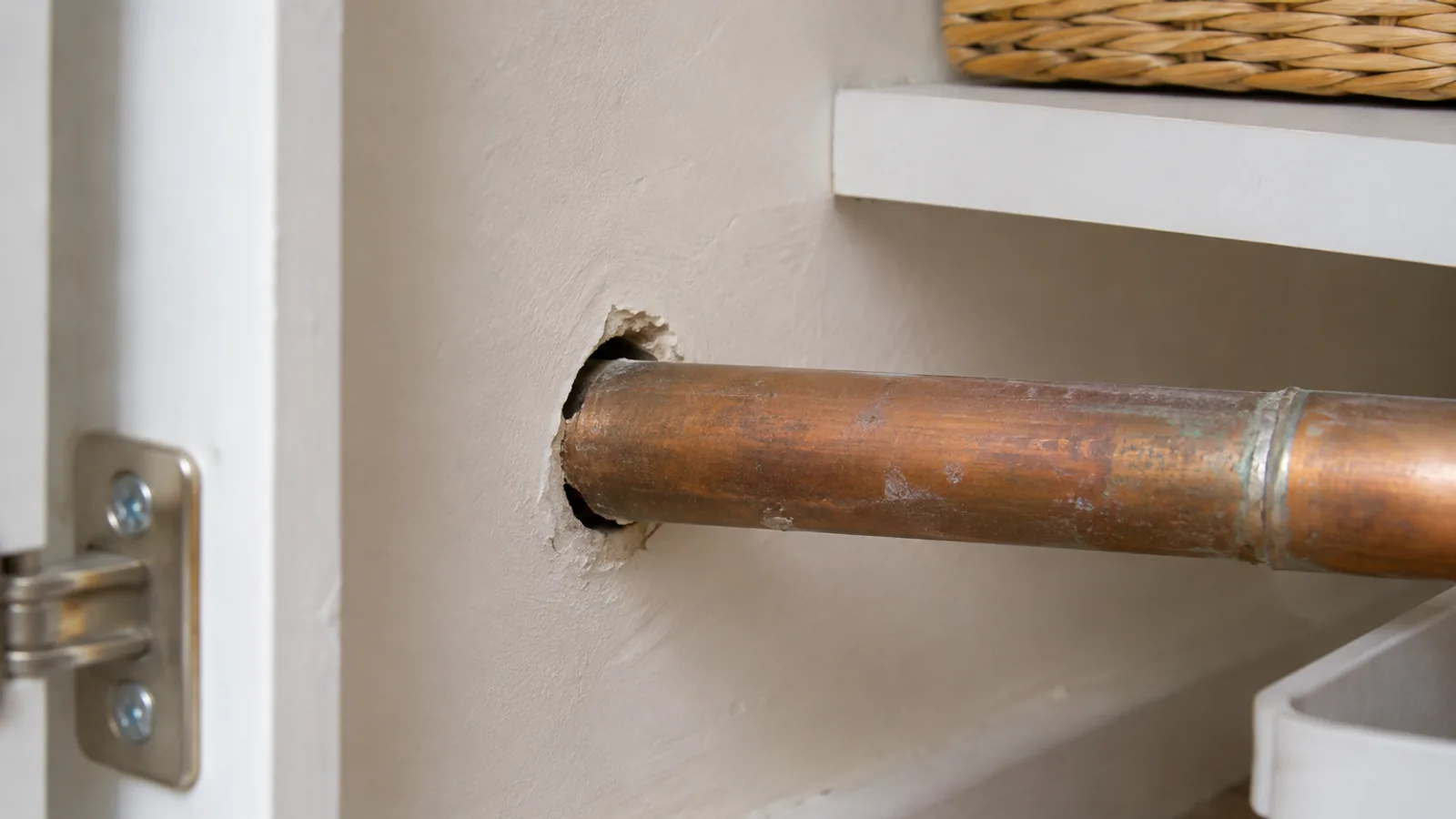
Take a photograph with a familiar object nearby for scale, without touching the suspected material. If you notice a gap, photograph the wider area as well as the close detail. The wider image shows whether the opening connects to a cupboard, pipe route or external wall. Date your notes, because a fresh mark after cleaning tells a different story from an undated mark found during a clear-out.
If you find droppings, avoid dry sweeping or vacuuming them. Use suitable protective and cleaning advice and wash hands afterwards. Do not pull off fixed kitchen units, lift floorboards or cut into a wall merely to chase the sound. Those actions may disturb wiring or plumbing, create further openings and make it harder to establish the original route. Where a cable or electrical fitting appears damaged, keep clear and seek the appropriate qualified help.
When mice or rats become more likely
A sound becomes more persuasive when it fits a cluster of signs. Mouse activity may be indicated by small droppings, gnaw marks and routes around kitchen units or service pipes. Rat activity may leave larger droppings, rub marks, damage and traces around drains, external walls or outbuildings. These are broad clues, not a home test with a guaranteed answer. The same building may have several possible access points, and old signs can remain after activity changes.
Consider the setting. A kitchen wall with fresh signs beneath the sink suggests a different investigation from a loft wall beside the roofline. A communal or terraced building can also have routes that cross a boundary, so the apparent source room may not contain the access point. Share relevant observations with a landlord, managing agent or neighbour where building ownership makes that necessary. Avoid placing bait into an unknown void: identification, safe placement and follow-up matter.
For signs centred on small interior routes, mice control may be relevant. For larger signs or activity connected with external ground or drains, rat control may be the better starting point. An inspection can determine which path applies rather than relying on the sound to choose for you.
A useful next step
If the sound repeats, if you find fresh droppings or gnawing, or if food areas may be contaminated, arrange an assessment. Give the inspector your log, recordings, photographs and any history of building work or previous pest activity. Tell them what has changed since the first sound and where you have already cleaned. This lets them compare current evidence with older marks.
You can continue ordinary housekeeping while waiting, particularly secure food storage and prompt removal of waste. Keep records of new signs, but avoid dismantling the building or applying a treatment based on a guess. The goal is to answer three separate questions: what made the sound, how it reached that space and whether there is ongoing activity. A noise can start the investigation; the combined evidence should direct the response.