How to keep a rodent activity log that is useful to a technician
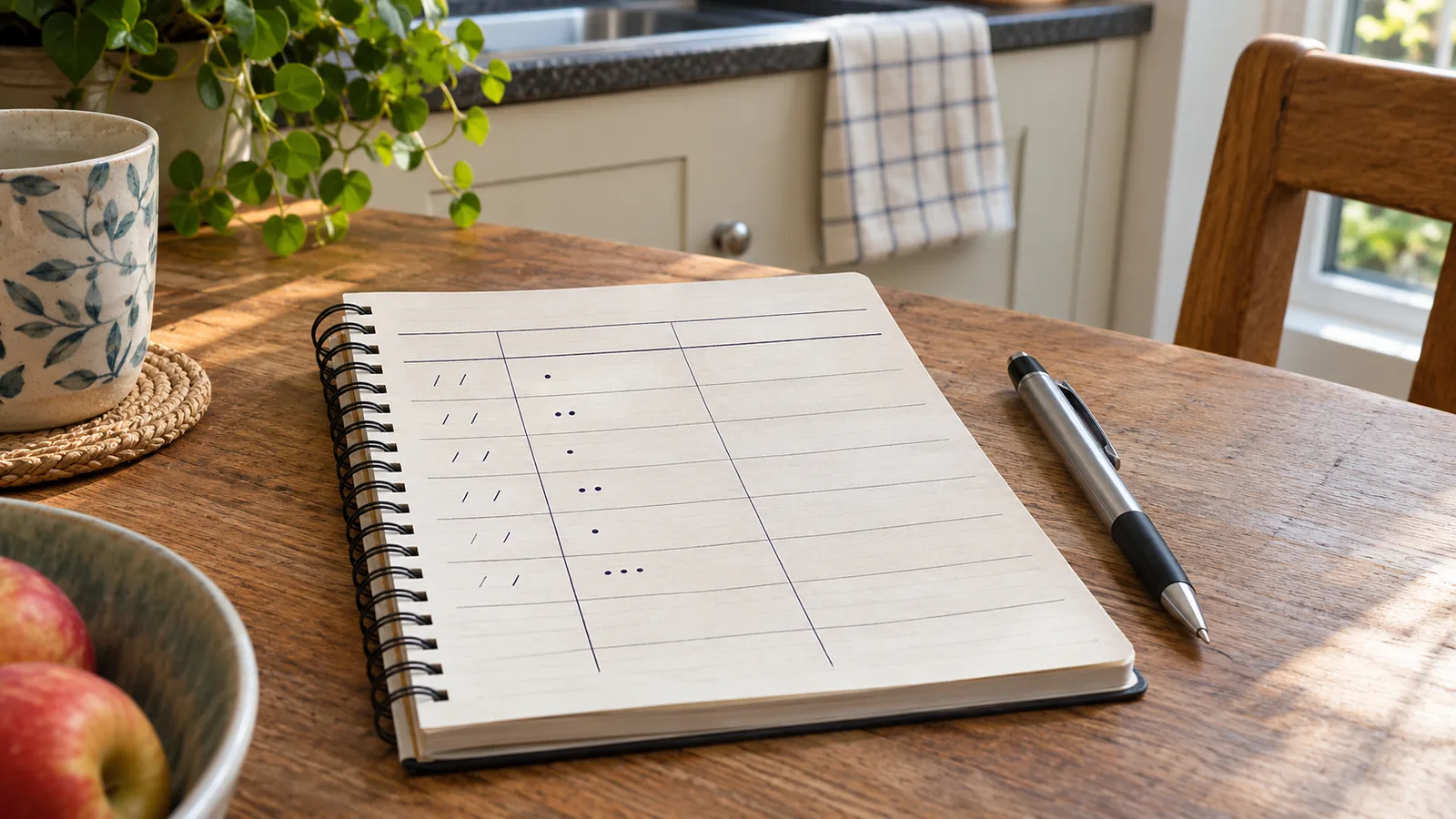
An activity log is a way to preserve the pattern of possible mouse or rat signs between visits. It does not need elaborate software or a perfect identification. A notebook page or phone note works if every entry answers four questions: when, where, what and what changed. Consistency matters more than length. A technician can use the sequence to decide whether signs are fresh, whether they follow one route and whether the agreed action is affecting activity.
Use one line for each observation
Start with a date and approximate time. Name the room and a precise position, such as “under sink, back left corner” or “outside, beside shed door”. Then describe the sign without naming the animal unless you actually saw it. Good entries distinguish a direct sighting from a sound, damaged package, dropping or mark. Add a photograph reference if you have one.
For example: “Tuesday, 7 am — three dark pellets under the sink near the waste pipe; photographed before cleaning; shelf had been wiped on Monday.” That is much more useful than “lots of mice again”. It gives a possible timing window and a location the technician can inspect. If you do not know whether the pellets were new, write “age unknown”. Do not make the log sound more certain than the observation allows.
Keep each entry brief. Long narratives are hard to compare. A simple table with columns for date, location, sign, photo and action works well. If several people live in the property, add who observed it only if that helps clarify the account. Ask everyone to use the same room names. “Back bedroom” and “Room 3” may be the same place, but a technician should not have to guess.
Set a realistic checking routine, perhaps once each morning in the places already identified. This is easier to sustain than inspecting every cupboard repeatedly throughout the day. Record unexpected sightings whenever they occur, but keep routine checks predictable. A regular check makes “no new sign” more meaningful because you know what was actually inspected. If you miss a day, leave the gap visible rather than filling it from memory.
Note the baseline and what changed
The first day of the log should describe what you found before cleaning or treatment. Take a few wider photographs so later marks have a reference. After you clean a surface safely, note the date and time. A fresh sign on that surface carries more weight than an undated sign discovered at the back of a cupboard. The same principle applies after a gap is repaired or food is moved into closed containers.
Include actions that may change the pattern: a bin moved, bird feeding stopped, a plumber’s visit, a device installed or a previously locked cupboard opened. Do not assume the action caused an increase or decrease; simply put it on the timeline. When reviewing a pest inspection, the technician can compare activity before and after a change.
Avoid counting a sound as a sighting or a photograph of an old mark as a fresh event. If you hear scratching for three evenings, make three entries with the times and location. If you photograph the same dropping twice, identify it as the same sign. This prevents the log from accidentally inflating the amount of evidence.
Add location detail without creating a complex plan
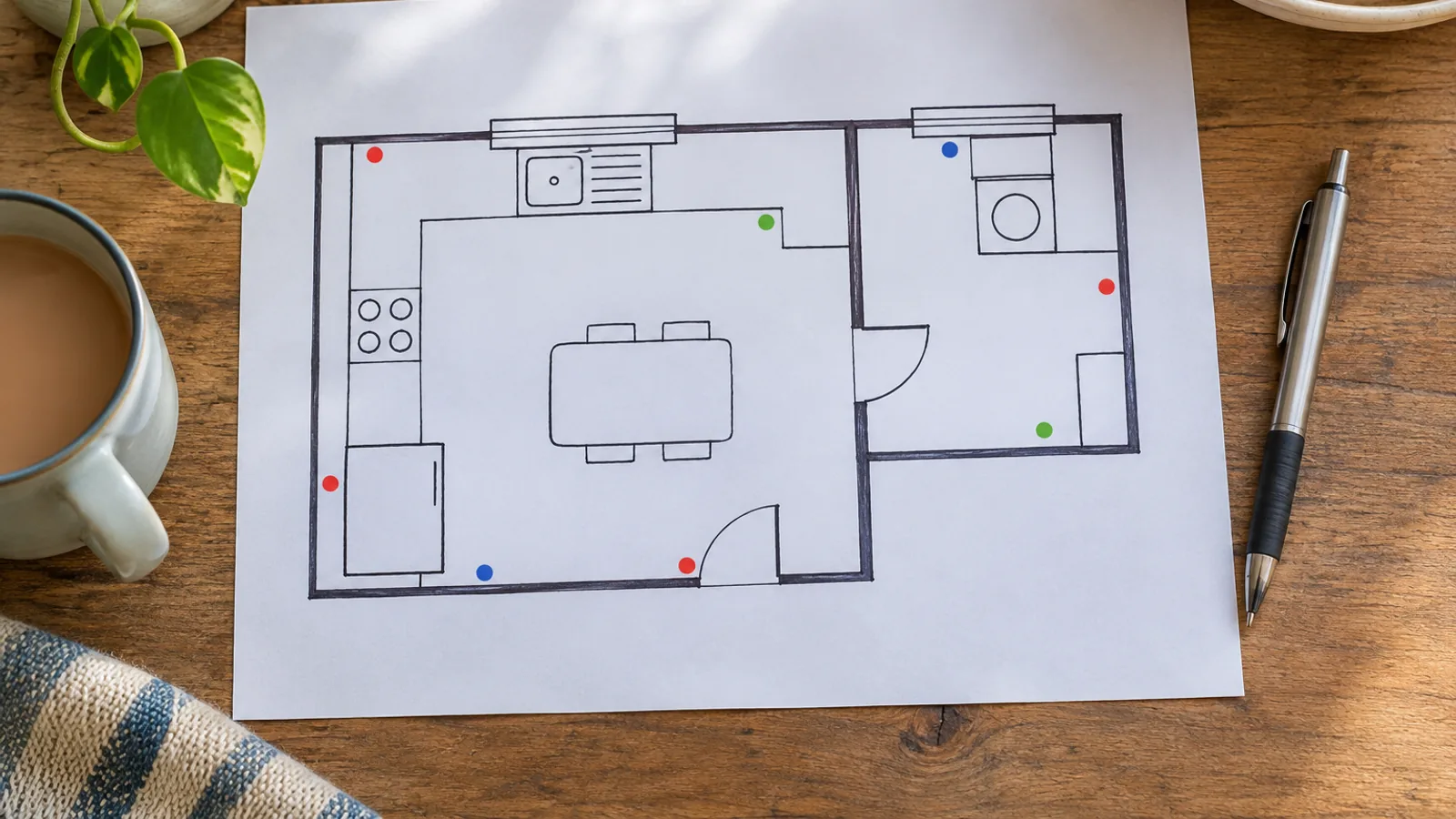
Draw a quick sketch of the relevant rooms. Mark doors, large appliances, pipe runs that are visible and the positions of observations. Give each point a number that matches the log. A wider garden sketch can show a shed, bin and drain if activity is outside. The drawing does not need measurements, but it should make the place easy to find again.
If an animal moved, show the observed direction with an arrow. Do not draw the route inside a wall as if it were known. Sounds can travel through building materials, and a visible animal may have come from a different opening. Use a question mark for a suspected route. This visual distinction keeps the record useful without turning it into an unsupported diagnosis.
For photographs, capture both the detail and the setting. A ruler beside a suspected dropping can show size without touching it. A wider frame shows whether the sign sat near a skirting board, food shelf or service pipe. Save the original image; heavily edited or filtered pictures can hide useful detail. Date the files or connect them to the numbered log entries.
Keep observations safe
Do not handle droppings or a nest to obtain a better picture. UK Health Security Agency advice says not to dry sweep or vacuum rodent urine, droppings or nests, because particles can become airborne. Photograph a sign before cleaning, then follow suitable damp cleaning and hand hygiene advice. Keep children and pets away from contamination. If food may have been fouled, discard it rather than leaving it for an inspection.
Avoid opening a wall, moving a professional station, probing a hole or scattering powder to manufacture tracks. Those actions can create risk and make the evidence harder to interpret. The log should record activity already visible in safe, accessible places. If a cable appears damaged or a drain cover is broken, note the hazard and seek the appropriate qualified help.
Use the log at follow-up
At the visit, show the most recent entries first. Point out where new signs appeared after a cleaned baseline and where activity seems to have stopped. Ask the technician what observations would best test the current plan before the next review. For a mice control programme, that might focus on small interior routes; for rat control, the relevant places may include external ground or drains. The actual focus should follow the assessment.
If the technician changes the plan, add the change as a dated line in the log. You can then compare observations from before and after it without relying on memory. Keep any written report with the log, but do not copy technical terms you do not understand merely to make it look formal. Ask what each recommendation means for your daily checks. A short, clear record is easier for the next person who attends to use as well.
Do not treat a quiet day as proof of clearance. Equally, do not assume a single post-treatment sighting means failure. The value of a log lies in its sequence: fresh signs, their locations and how they change over an agreed period. If nothing new appears, write “no new signs observed” only for places you actually checked. A cupboard you could not access remains unchecked, not clear.
Keep the record until the provider confirms how the outcome will be assessed. A useful log is honest, compact and repeatable. It allows the technician to revisit an earlier assumption, helps you understand the recommendation and gives everyone a shared account of what happened between appointments.