Rats near a drain: what to observe before calling for help
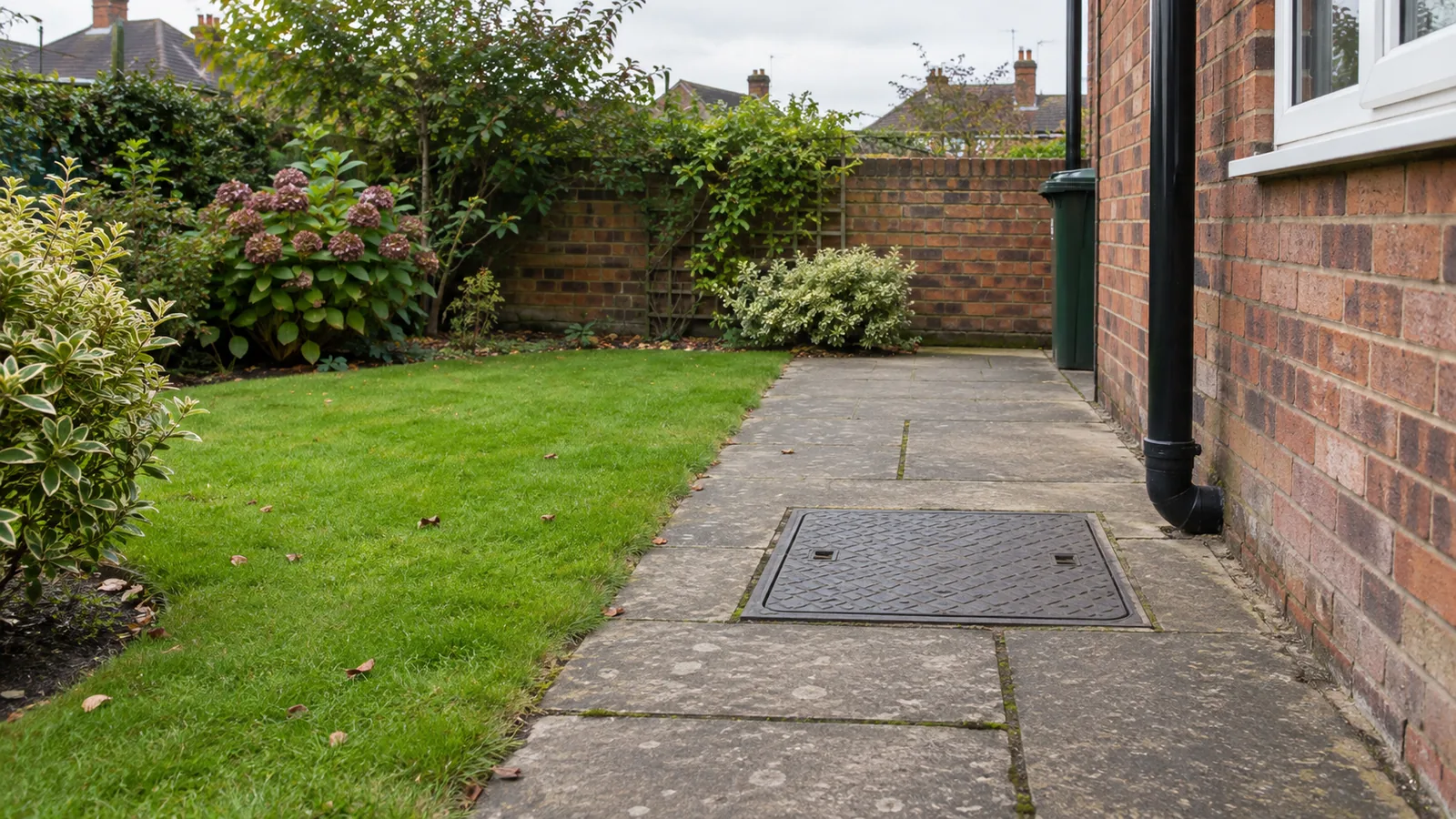
A rat seen beside an outdoor drain raises an obvious question: is the drainage system its route? It might be, particularly if a pipe or chamber is damaged. The sighting alone cannot answer it. Rats also travel along walls, under cover and toward food or water, and a drain may simply be a landmark on that route. Before calling, record the position, frequency and visible condition of the area. A useful account can help a pest controller decide whether drainage expertise is also needed.
Start with what you actually saw
Write down the date and time, where you stood and where the animal moved. Did it disappear beneath a cover, into a hole beside it, under a fence or behind a bin? These are different observations. If it ran across a drain cover, that does not establish that it emerged from the chamber. A short video from a safe distance can be useful if the animal appears again; do not approach it to get a closer shot.
Look for a repeated route. Rats often use sheltered edges, so note whether sightings occur along the same wall or behind the same structure. Photograph the wider setting: the drain, adjoining paving, nearby vegetation, refuse area and building wall. A close-up without context may make a small defect look dramatic while hiding a simpler source of shelter several feet away.
If you can do so safely, mark the position on a simple sketch of the garden or yard. Include the back door, boundary, shed and any other drain cover. This is especially helpful when several covers look alike or when a contractor may attend while you are out. Use an arrow for the direction of movement and write “seen” beside it. Keep a suspected underground route separate, because its direction is not known from a surface sighting.
Do not estimate numbers from several sightings unless you have seen more than one animal at the same time. One rat can pass repeatedly. Equally, a single sighting may be worth investigating if there are fresh signs nearby. Keep the record factual and let the pattern develop over a few days if the situation is safe to observe.
Check the visible drainage area safely
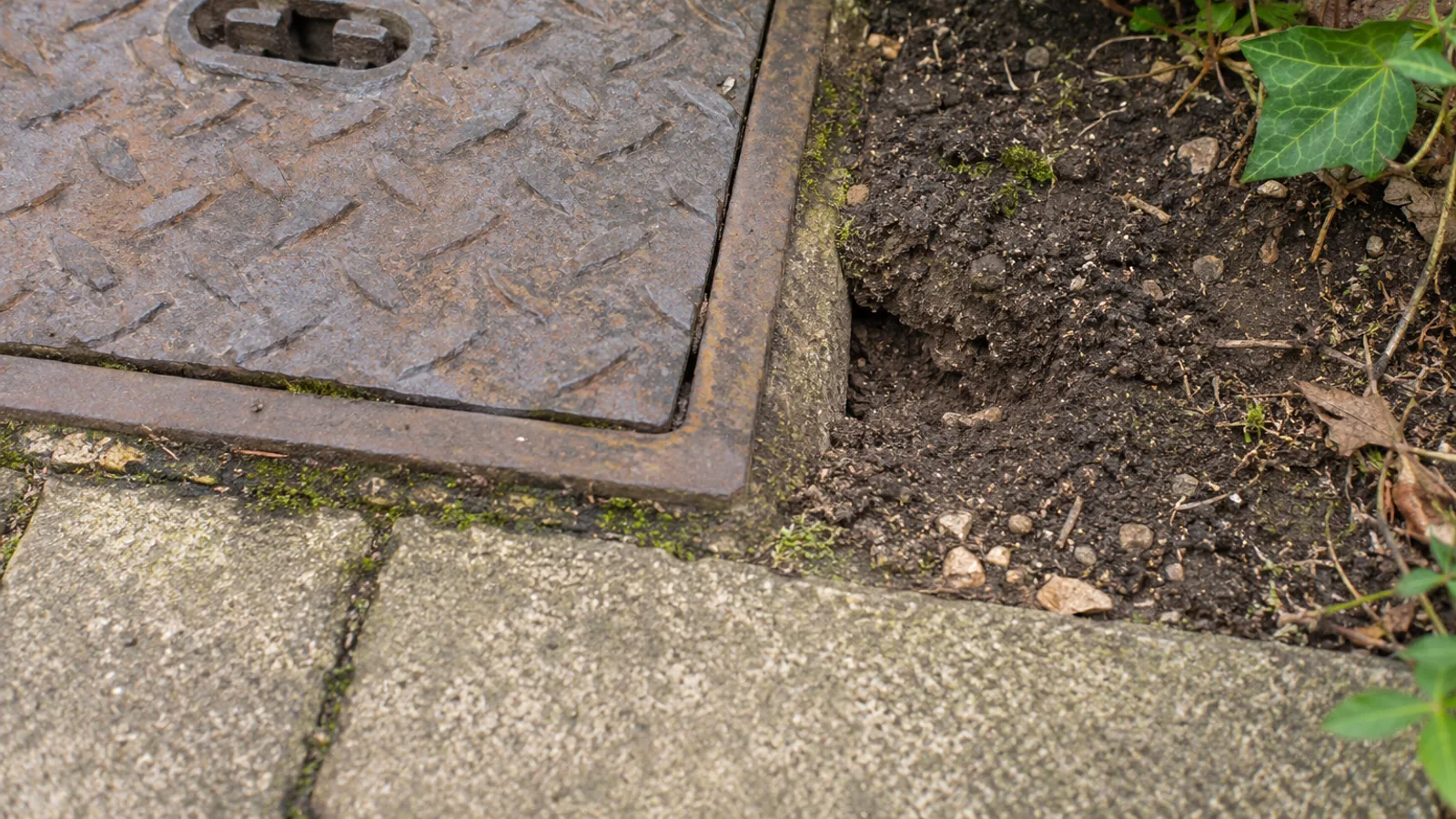
From the surface, note whether the inspection cover is present, seated level and apparently intact. Look for a gap where paving meets the frame, fresh soil, a hole or signs of subsidence. Photograph these without lifting the cover. A broken or displaced cover should be reported for repair; it may also be a trip hazard. Do not put a hand into a hole or chamber, and keep children and pets away from it.
Sheffield City Council notes that rats can escape sewer systems through broken drains or missing covers. Newcastle City Council also identifies broken drains as possible entry points and distinguishes pest treatment from the repair work. Those points support checking the condition of a drain, but they do not mean every rat near one originated there. A drainage contractor may need to assess an inaccessible defect if the evidence points that way.
Notice where rainwater or wastewater is going. A persistent wet patch, foul water, strong odour or collapsed surface deserves attention in its own right. Do not use a hose or chemical to flush a suspected rat route. That can be unsafe and may obscure the condition an engineer needs to inspect. If there is sewage or another immediate hazard, avoid contact and seek the appropriate drainage help promptly.
Look beyond the drain
Check nearby areas that you can access without disturbing anything. Is there a loose bin lid, food waste, spilled bird seed, fallen fruit or pet food? Are there sheltered spaces under decking, dense vegetation or a shed? These can support activity regardless of whether the drain is defective. Photograph a hole with the surrounding ground visible, but do not probe it or fill it before an assessment if it may be active.
Other signs can strengthen the account: droppings, repeated smooth runs in vegetation, footprints in soft soil, gnawing or rub marks. An old hole may remain after activity has changed, and a fresh-looking mark can have another cause. Date each photograph and note what has been cleaned or moved. Barnet Council lists burrows near defective drains among possible rat signs, while advising that an investigation should consider the wider evidence.
If you find signs inside, note the room and exact location. A rat beside an outside drain and signs under an indoor sink may be related, but the route still needs proving. A rat control assessment can review the animal evidence and the building. A separate pest inspection can be appropriate where the species or route is uncertain.
Know when a drainage check belongs in the plan
A pest controller may identify a likely structural or drainage entry point, but repairing a buried pipe or chamber may require a drainage specialist. The two tasks answer different questions. Pest control assesses and manages the animals; drainage work identifies and corrects a fault in the system. If a defect remains, treatment alone may not give a lasting result. Ask what evidence points to the drain and what kind of check would confirm it.
For a rented property or shared drain, tell the landlord or managing agent about the observation and any recommended repair. Keep photographs and the pest visit report together so responsibility for the next step is clear. Do not assume a drain belongs solely to your property because its cover is in your garden; ownership and maintenance arrangements can vary. The appropriate water company or local authority may advise on a public sewer issue, while private drainage arrangements need property-specific advice.
When a drainage survey is recommended, ask how its findings will reach the pest controller. A camera report can direct repair, but activity may still need monitoring afterwards. A sound pipe does not rule out another route. Coordinating reports prevents either trade from working from an outdated assumption.
Give a clear account when you call
Lead with the sighting and the most concrete supporting fact: “A rat went into a hole beside the inspection cover on two evenings,” for example. Add whether the cover is loose, there is fresh soil, and any signs have appeared inside. Mention nearby food sources and whether you have removed them. Send the wider and closer photographs in date order if requested.
While waiting, keep refuse contained, clear spilled food and avoid contact with suspected contamination. Do not lift a chamber cover, pour products into the drain or block an opening without advice. Those actions can make access, drainage or the animal problem worse. A careful observation record makes it easier to decide whether the next step is pest control, drainage repair or a coordinated approach. The drain’s location is a starting clue; the route needs evidence.