Mouse droppings or something else? A room-by-room identification guide
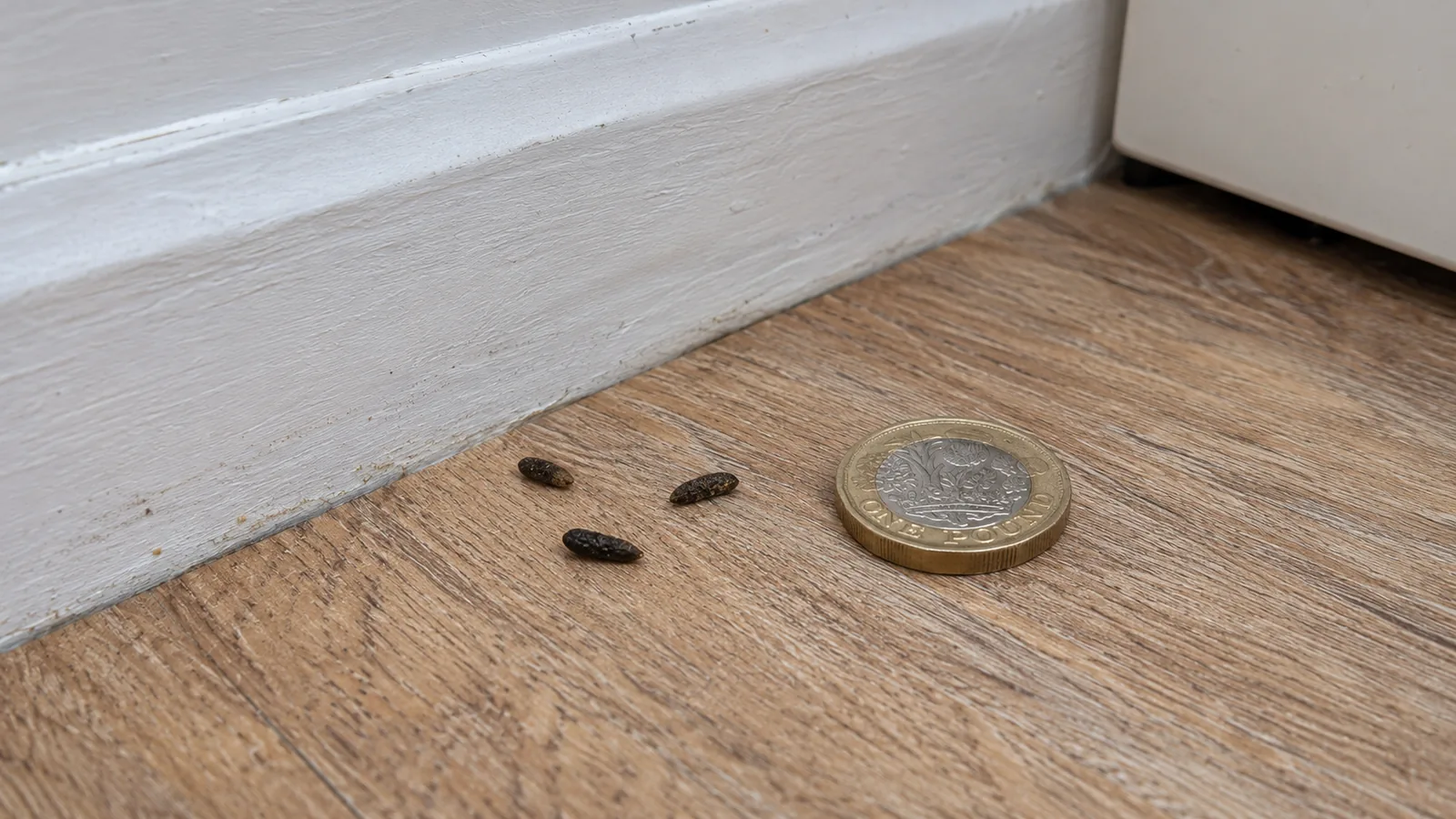
Small, dark pellets along a skirting board or inside a cupboard may be mouse droppings, but appearance alone cannot confirm the animal. Look at their size and shape, where they are found and whether there are other signs such as gnawed packaging, repeated activity or gaps around pipework. Photograph the finding before cleaning it. If you are unsure, a pest inspection can establish what is happening without relying on a single clue.
What mouse droppings usually look like
House mouse droppings are commonly described as dark, rice-grain-shaped pellets. Barnet Council gives a typical length of about 5 mm, with colour ranging from light brown to nearly black. Real findings vary: lighting, age and the surface beneath them can change how they appear. A photo taken beside a familiar object can be useful for scale, provided you can do so without touching the material.
Avoid treating a precise measurement or colour as a verdict. A young rat’s droppings may be harder to distinguish from those of a mouse, and small pieces of food, seeds or insect remains can look convincing at a glance. The location and the wider pattern are often more informative than a close-up photo of one pellet.
If you find a group of possible droppings, note whether they are scattered along an edge, concentrated beneath a cupboard or found next to damaged food. A single mark on an otherwise clean open floor tells you less than repeated findings in the same sheltered place.
Start with the kitchen, but follow the evidence
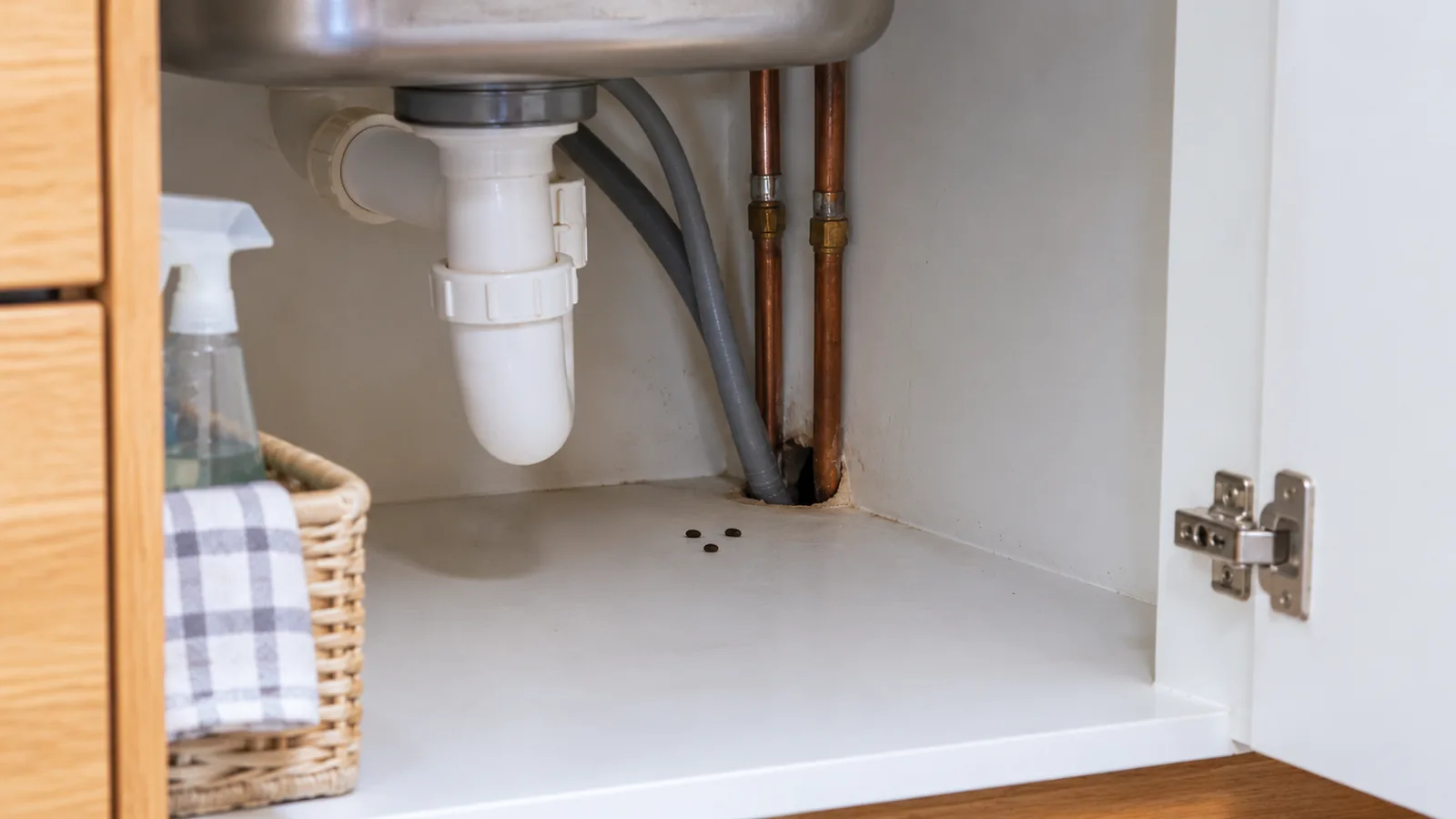
Kitchen cupboards are a sensible first place to look because they offer shelter and may contain food. Check the back of low cupboards, the space beneath the sink and the edges around appliances that can be viewed safely. Do not pull out a heavy appliance or reach into electrical spaces simply to investigate. A small gap around a pipe is worth noting, although a gap by itself does not prove that a mouse is using it.
Look at packaged food as well as the floor. A torn packet, loose crumbs and droppings in the same cupboard form a stronger picture than either sign alone. Put food that may have been contaminated aside rather than trying to rescue it. Keep unaffected food in well-sealed containers while the cause is investigated.
The existing mice control service explains how an inspection-led approach can connect signs inside a kitchen with possible access points elsewhere in the property. That matters when cleaning removes the visible evidence but activity returns.
Check utility spaces and quieter rooms
Boiler cupboards, airing cupboards, storage areas and loft access points can also show activity. The British Pest Control Association lists droppings beneath sinks, around boilers and in roof spaces among common findings. These places are less frequently disturbed, so a small accumulation may be noticed before anyone sees an animal.
Keep the inspection proportionate. Use a torch from a safe position and record what you can see without dismantling panels or disturbing possible nests. If a loft has poor footing, exposed wiring or difficult access, leave it to someone equipped to inspect it. A useful report says where the marks appeared, when they were first noticed and whether new ones have appeared since.
In living rooms and bedrooms, look along edges and behind accessible furniture rather than searching every open surface. Also note sounds, gnawing or a distinctive smell, but remember that none of these signs identifies a species on its own. The aim is to build a reliable account, not to force a diagnosis from ambiguous evidence.
Could the marks be something else?
Seeds, charred crumbs, soil and debris from building materials can resemble droppings. Insect deposits may be much smaller or have a different texture. Rat droppings are generally larger, but size can overlap enough to make a confident identification difficult, particularly from a photograph. Even when the material is clearly from a rodent, the species and the route into the property may still need inspection.
Ask three practical questions. Is the material appearing again after the area has been cleaned safely? Is it found beside food, a sheltered route or a likely access gap? Are there other signs nearby? Several consistent clues justify prompt attention. One uncertain mark warrants a clear photo and a measured check of the area rather than an elaborate treatment plan.
This is particularly important in flats and shared buildings. Activity seen in one room may relate to a route through another unit or a communal space. Record the unit and exact location; avoid making assumptions about a neighbour’s housekeeping or the source of the problem.
Photograph first, then clean safely
Before cleaning, take a wide photo showing the room and a close photo showing the marks. Write down the date and location. If a technician is due soon, ask what evidence they would like left in place. Barnet Council advises leaving signs for its pest team where doing so is safe and possible. When hygiene requires cleaning sooner, the photographs and notes still help.
Do not sweep or vacuum suspected rodent droppings. UK Health Security Agency guidance warns that this can put contaminated particles into the air; it recommends a wet wipe or similar method instead. Follow suitable cleaning product instructions, keep children and pets away from the affected area while cleaning, and wash your hands thoroughly afterwards. If food or food-contact surfaces may be affected, treat that as a hygiene issue and clean them before use.
There is no need to handle a pellet to test whether it is fresh. Colour and texture are unreliable shortcuts, and touching it adds an avoidable exposure. If the amount is substantial, access is difficult or the setting is a food business, seek site-specific advice before disturbing the area.
What to tell the person inspecting the property
Give a concise timeline: the first sighting, rooms involved, any repeat findings and whether food or packaging was damaged. Mention previous treatment, building work, leaks or recently opened gaps if relevant. Share the photos, including one that shows the wider setting. A technician can then check the finding against other signs and look for routes and conditions that need attention.
If you manage a property, ask occupants to report observations with a location and date rather than simply saying they have seen mice. Consistent records make it easier to tell whether several reports describe one area or different parts of a building. For a suspected active problem, arrange professional mice control rather than waiting for a perfect photograph.
The useful conclusion is a next step
Droppings can be a valuable clue, but they are not a complete diagnosis. Note the size, pattern and location; check for supporting signs without disturbing hidden spaces; photograph the finding; and clean it using a wet method when appropriate. If new marks appear, food is affected or the evidence points to more than one room, a rodent inspection can identify the likely species and guide the next action.