What to check in luggage after a suspected bed bug exposure
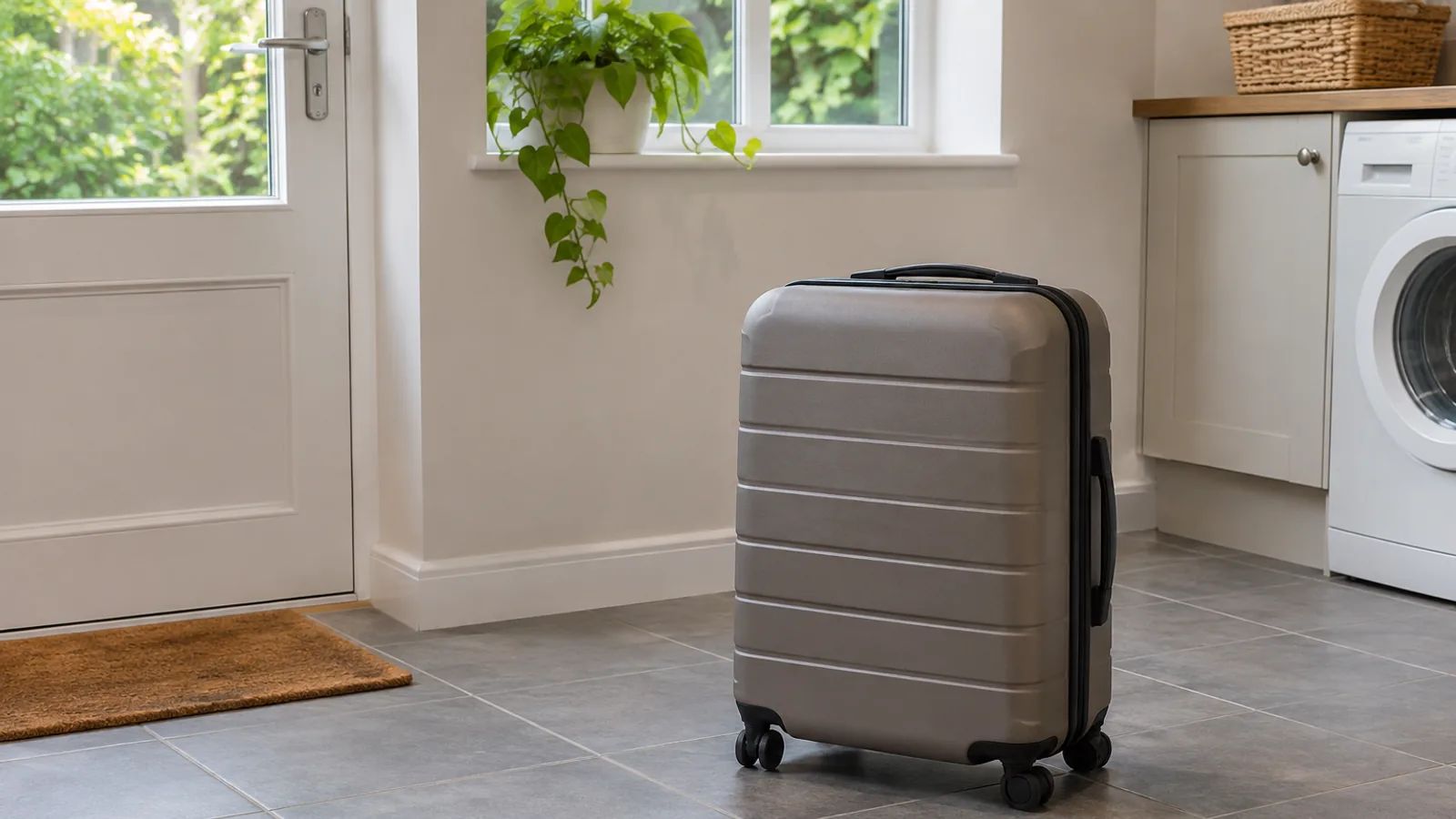
Learning that a room you stayed in may have had bed bugs is unsettling, but the risk is not proof that insects travelled home with you. Luggage offers folds and seams where a small insect can hide. The useful response is to keep the case away from beds and sofas, inspect it in good light, manage clothing carefully and look for physical signs. A measured check is more helpful than unpacking across several rooms or discarding everything in haste.
Choose a contained place to inspect
If you have not yet brought the case inside, pause before taking it into a bedroom. The NHS advises checking luggage and clothing carefully after a stay where bed bugs were known to be present. Bedford Borough Council suggests keeping a suitcase in an isolated area until it or a qualified technician can be inspected. Choose a place with a hard, easy-to-clean surface and enough light to see seams. Keep children and pets away from the contents while you work.
Do not put the case on a bed, upholstered chair or carpet to open it. Place it on a clean hard surface or in a shallow container if one is available. Have sealable bags ready for clothing and a phone for photographs. Work on one section at a time. If you are in shared accommodation, tell the person managing the property what happened and agree where the check can take place without moving luggage through other bedrooms.
Keep the case closed until you are ready. A bag left open in a hallway may allow loose belongings to spread. Do not shake it out indoors. If you see an insect, photograph it before trying to contain it. An image beside a ruler or coin can help identification, but do not crush the specimen merely to take a picture.
Inspect the case itself
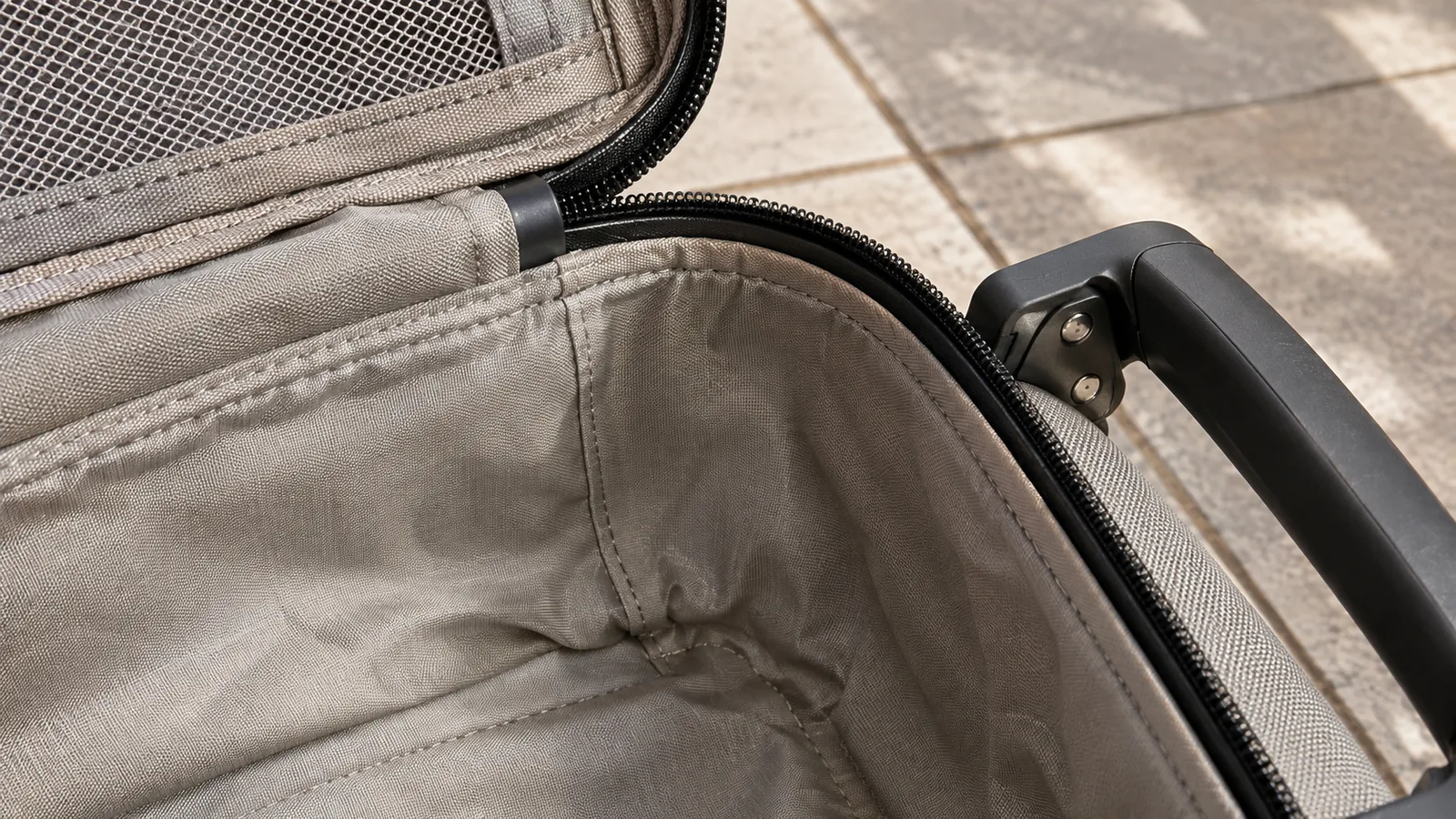
Start outside: handles, wheels, hard-shell joints, fabric edging, pockets, zip tracks and folds around the lid. Then open the case and check lining seams, corners, pocket edges and the underside of removable dividers. Use a torch at a shallow angle to reveal small shapes in creases. A hard case is not automatically safe; its joints and wheel housings still create hiding places.
Look for a live insect, pale cast skin, tiny eggs or clusters of dark spotting. Other crumbs, lint and stains can resemble signs, so photograph anything uncertain rather than deciding from a glance. Bed bugs are commonly associated with sleeping areas, and the NHS notes that adults are around 5 mm long. Smaller stages can be much harder to see. A clear case inspection reduces uncertainty but cannot guarantee that every hidden insect has been found.
Pay particular attention to places that were nearest the hotel bed, such as the side of a case that rested against a headboard or bedside unit. This does not mean the other side can be ignored; it simply helps you work in an orderly sequence. Check the bottom and feet before turning the case over, then return it to a clean position. If the lining is removable, follow the manufacturer’s design rather than cutting it open. Photograph anything you cannot inspect easily and mention that limitation if you seek advice.
If a pocket contains paper, a book or a toiletry pouch, examine its outer edges before placing it on another clean surface. Keep checked items separate from unchecked ones. Avoid spraying the suitcase with a household insecticide without advice; coverage, suitability and follow-up matter, and a product may damage material or create exposure.
Handle clothing and soft items carefully
Take clothes out in small groups and place them directly into a sealable bag or appropriate laundry route. Do not sort them on a bed. The NHS recommends a 60°C wash and hot tumble drying for affected bedding and clothing when the fabric permits. Follow garment care labels and ask a professional about items that cannot tolerate heat. Do not assume a cool wash has the same effect.
Keep clean or treated items apart from items not yet checked. The bag is a way to contain movement, not a permanent treatment. Label it so nobody opens it casually in another room. Bedford Borough Council advises washing and drying clothing at the highest possible temperature, but the correct method for a particular item depends on its material. A pest professional can advise on delicate belongings if physical evidence is found.
For shoes, backpacks and accessories, inspect seams, pockets and straps in the same way as the case. A quick glance at the outside of the suitcase does not cover every item that shared the room. At the same time, avoid expanding the search to every object in your home based only on a suspected exposure. Keep the check proportionate to what was actually in the accommodation.
If an item was never in the room, keep it outside the suspected group. This simple boundary prevents a manageable task from becoming an endless search. For items that were in the room, note whether they sat on the bed, floor, luggage rack or a hard surface. That history may help a professional assess risk if you later find an insect. Do not place unchecked shoes or a backpack back into a wardrobe merely because the main suitcase looked clear.
Record evidence and decide what follows
Make a note of the accommodation dates, when you learned of the concern and where the luggage has been since returning. Photograph any insect or suspicious cluster before cleaning. If you find a live specimen, seek identification. Bites alone do not confirm bed bugs, and a reaction may appear after the trip without showing where it occurred. Look for physical evidence in the luggage and sleeping area.
If you find credible signs or later notice activity near a bed, arrange a pest inspection. Share the photographs and explain which items were washed, bagged or moved. Do not carry a possibly affected mattress or furniture into another room to check it. The professional can decide whether bed bug treatment is needed and which areas should be included.
If the inspection finds nothing, keep a simple watch rather than repeatedly opening the case across the home. Store the cleaned luggage away from sleeping areas and check the bed and nearby furniture if new signs appear. A single negative check cannot prove zero risk, but it can guide a sensible next step. Careful containment, clear photographs and attention to physical signs give you a more reliable basis for action than fear of the trip alone.
If a hotel or host confirms bed bugs, keep its message with your notes. It can help date the potential exposure, though it still does not show that insects reached your property. If you live with others, explain the practical plan without presenting a suspected exposure as a confirmed home infestation. Agree that new physical signs will be photographed and reported, and avoid moving the case or its contents through bedrooms while uncertainty remains.
Best time for a pest control visit today
Checking London conditions, weather and visit access difficulty...
Live London weather
Based on weather, time and pest type
Preparing advice...