How to avoid moving bed bugs between rooms

When bed bugs are suspected, the impulse to move everything out of the bedroom is understandable. It can also carry insects or eggs into places that were previously unaffected. Bed bugs may travel on belongings and can move between rooms themselves, so containment and a planned inspection matter. Keep suspect furniture in place, handle fabrics in sealed groups and ask the provider how to prepare the rooms they need to assess.
Keep the suspected area defined
Start by noting where you found the strongest physical sign: a live insect, cast skin, eggs or dark spotting near a bed. A bite alone is not enough to map an infestation. Photograph the sign and its position. Check the nearby bed frame and mattress seams without carrying items into another room for a better view. Bring a torch to the room instead.
Rochdale Borough Council advises not removing furniture from affected rooms because beds and other furniture can often be treated. Discarding or relocating a bed prematurely can move insects through hallways or into another living space. Leave the mattress and frame where they are unless a professional gives a specific instruction. If you must move a piece for access, ask how to do so within the treatment area.
Do not start sleeping on a sofa in a different room purely to escape the suspected bedroom without discussing it with the provider. Bed bugs seek a host and may spread, while moving bedding and nightwear can also carry them. A household’s sleeping arrangements may need to change for other reasons, but the pest plan should account for where people are resting and what they take with them.
If the room is shared by two people, agree where personal belongings will stay until the check. A handbag left on the bed, then carried to a second bedroom, is an avoidable route for movement. The same applies to a basket of laundry collected from several rooms. Keep affected and unaffected items separate and give each bag a simple label. This is more manageable than treating every possession as equally suspect.
Move fabrics only with a destination
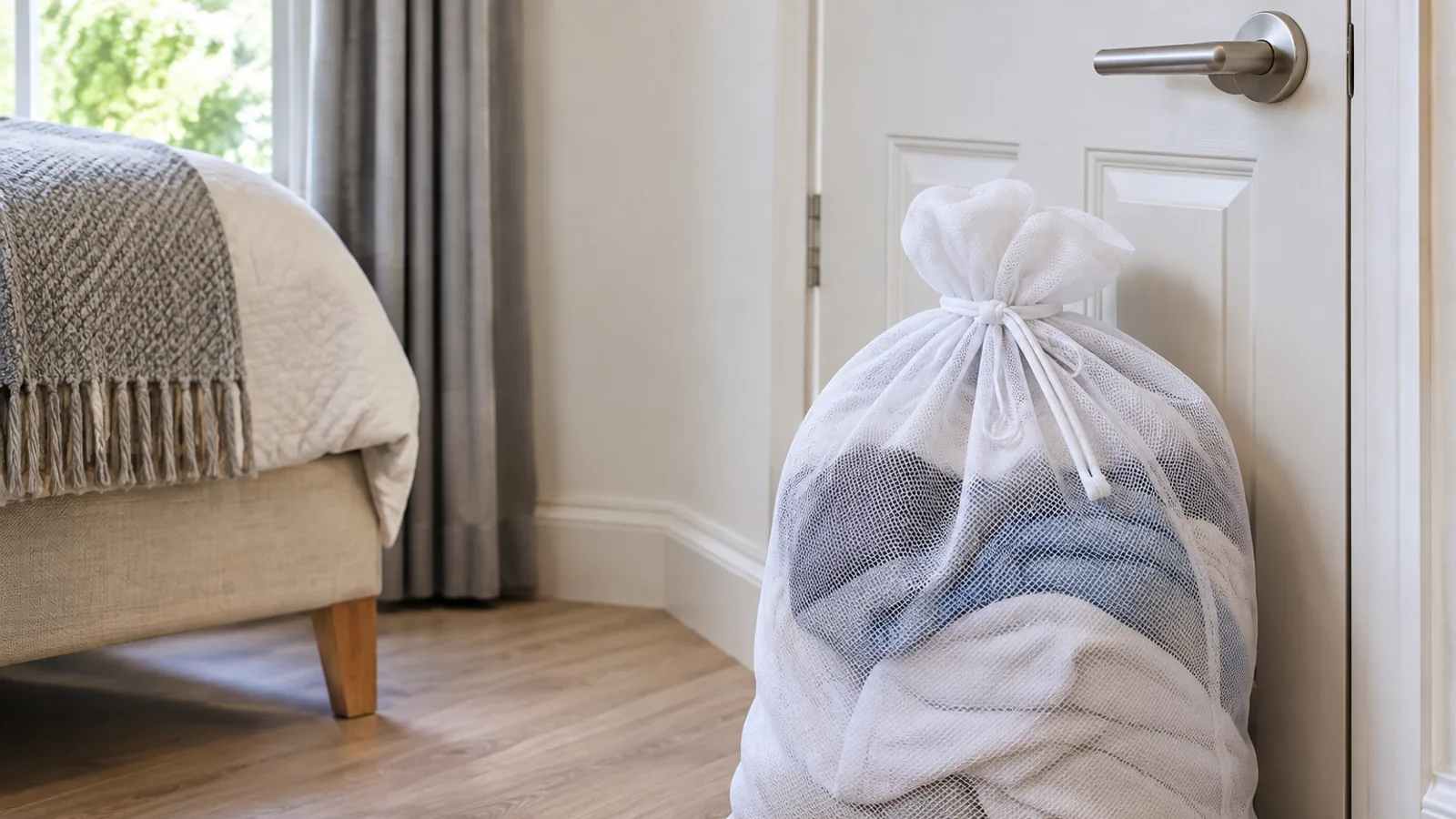
Bedding and clothing may need laundering. Gather items in the affected room and place them into a closed bag before carrying them to the machine. Do not sort them on the landing or pile them on a sofa. Open the bag only at the washer, then keep the cleaned load separate from unchecked items. Use a suitable hot wash and drying method where fabric labels permit, following the provider’s instructions. The NHS gives 60°C washing and hot tumble drying as options for affected fabrics.
For delicate items, do not improvise heat or chemical treatment. Bag and label them, then ask how they should be handled. A closed bag contains the item for transport; it is not proof that the contents have been treated. Keep a simple list of which bags have been processed so clean clothes do not mix with unchecked ones. If you need clothes for daily use, take a planned set through the agreed process rather than repeatedly opening every wardrobe.
Shoes, books, bags and small personal items can also be moved accidentally. Before carrying an object out, ask whether it was near the bed and whether the move is necessary. Inspect obvious seams or folds in good light. Photograph anything suspicious. Do not shake an item over a clean room or spray it with a household product because you cannot see inside.
Prepare for an inspection without scattering belongings
A provider may ask you to reduce clutter or make skirting boards and bed joints accessible. Follow the specific preparation list for that service. Different methods call for different arrangements. Moving everything into an unaffected room can hide the original distribution and widen the problem. Keep items grouped in the room where they were found, or sealed for a direct treatment route, until you know the plan.
Before the visit, ask which rooms should be made available even if only one has obvious signs. An inspector may need to compare adjoining sleeping areas or furniture. Make a note of any room that cannot be accessed and why. An unchecked room should not be described as clear. If access is controlled by a landlord or housemate, arrange it in advance rather than waiting until the technician arrives.
If a large item must eventually be discarded, ask how it should be wrapped and transported. Do not place a suspected mattress in a communal hallway or leave it outside where someone may take it. Rochdale Council notes that disposal is not automatically necessary. A professional can judge whether the item is treatable and how to handle an exception.
Keep visitors, cleaners and housemates informed of the practical boundaries. They do not need an alarming claim about every room; they need to know which items should not be moved and where clean laundry belongs. In a shared home, agree who will convey the provider’s instructions so different people do not make conflicting changes.
Avoid actions that make the pattern harder to read
Do not use a fogger or multiple over-the-counter sprays on the assumption that more product will solve the problem. The British Pest Control Association warns that poorly chosen amateur treatments can make control harder and encourage movement. A pest inspection can identify the species and extent. Tell the professional about any product already applied.
Keep a short log of sightings by room, with dates and photographs. Note which bedding was washed and when. If signs appear in another room, report them immediately rather than moving that room’s furniture into the first one. A second sighting might reflect an existing wider problem or new movement; the inspection should determine which areas require attention.
Photograph both the insect and the wider location if possible. A close image can help identification, while the wider frame shows whether it was by a bed, sofa, door or stored bag. Keep a separate note of which items recently crossed that boundary. Do not infer that a person carried the insect from their movements alone. The record is meant to guide the search, not assign blame.
Return to normal use through the agreed plan
After bed bug treatment, follow the provider’s instructions about room access, cleaning and belongings. These vary by method and product. Do not assume that a quiet night means all items can be mixed back together. Ask what signs to monitor and when a follow-up assessment will determine the next step. Keep treated and unchecked items separate until their status is clear.
Containment is practical rather than dramatic. It means each item has a known location, a reason to move and a destination. Keeping furniture in place, bagging fabrics for direct laundering and recording new signs helps a professional see the actual pattern. That gives the household a better chance of addressing the affected rooms together, instead of accidentally distributing uncertainty throughout the property.
Best time for a pest control visit today
Checking London conditions, weather and visit access difficulty...
Live London weather
Based on weather, time and pest type
Preparing advice...